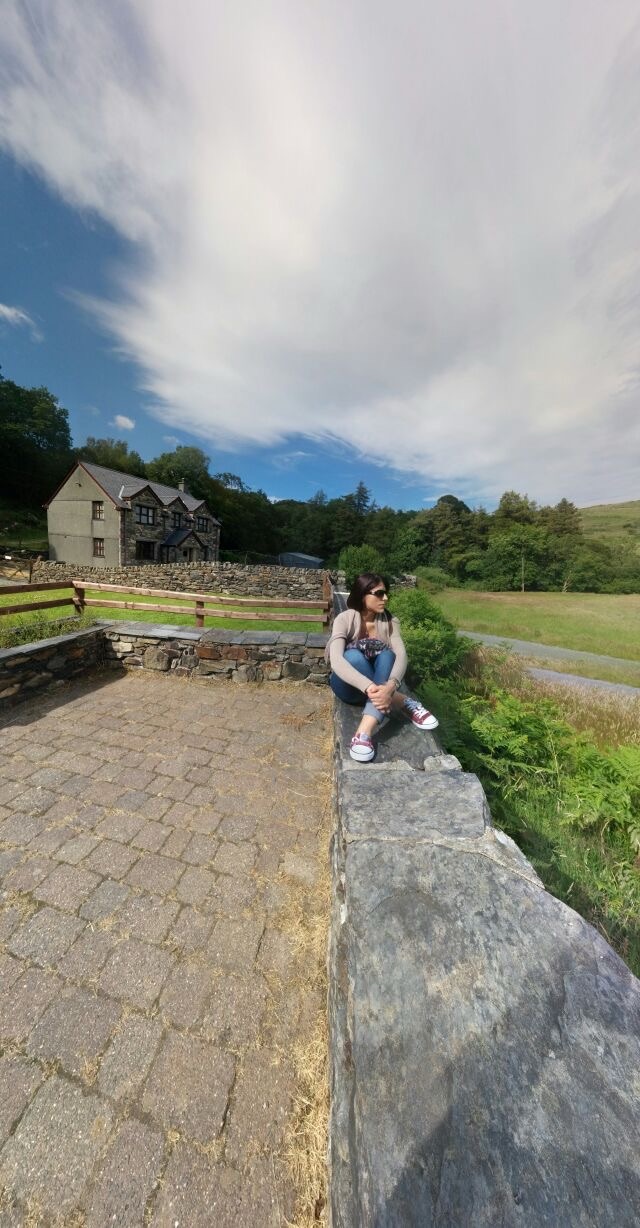
This photo of me, was taken by my husband in 2015.
We were in Snowdownia in Wales for our yearly trip to celebrate our wedding anniversary. We love the scenery of Snowdonia and the beautiful old castles we discover along the way. I can’t remember the name of the castle where this photo was taken, mostly because my mind was in a daze. Sadly, it wasn’t a happy daze. I was deeply unhappy within myself.
This photograph probably doesn’t show it to everyone, but at this stage of my life I was extremely thin. I was hardly eating, exercising excessively and eventually had to face the reality that I was developing an eating disorder. I was seeking human approval with the way I looked, but on the outside, very few people would have known. Underneath it all were deeply rooted issues that I didn’t yet understand.
When this picture was taken, I was mentally and physically exhausted. I was also deeply tormented by a situation in my life that I couldn’t make sense of. I carried so much hurt, confusion and sadness within me.
At the time, we thought this photograph captured me enjoying the picturesque views from the castle grounds. For months afterwards, I genuinely thought it was a great photograph. Then, a few years ago, I stumbled across it again. And suddenly, I saw something completely different. To me now, this photograph tells a story of hurt, depression, a broken spirit and a cry for help.
Deep down, I was incredibly sad. I felt alone. I had spent far too long seeking the approval of others through my appearance and my abilities.
That is one of the things about pain that we don’t always understand. Sometimes a person can look completely fine while quietly falling apart inside. It wasn’t until much later that I could no longer hide my pain.
Sometimes I feel sad when I look at this photograph, because I know just how broken I was at that point in my life. I wish I could go back and tell that version of myself that she was loved, that she was enough, and that she didn’t need to earn her worth through her appearance or through the approval of other people but that her identity is in Jesus.
“Obviously, I’m not trying to win the approval of people, but of God. If pleasing people were my goal, I would not be Christ’s servant.”
Galatians 1:10 NLT
Eventually, I decided to have life coaching and CBT. At the time, I believed that if I could work on myself, I could become a better version of who I was. My personal turmoil and low self-esteem were affecting my ability to do my job and my relationships with others, and I desperately wanted to change. And those things helped me in ways I am grateful for. But looking back now, I realise they weren’t what I ultimately needed most. What I really needed was God. I just didn’t understand that yet.
This photograph was taken eleven years ago. And so much has changed in those eleven years. The woman in this photograph had no idea what God would eventually do in her life. She couldn’t see the journey ahead. She couldn’t see the healing, the refining, the surrender or the transformation that would come. But God could.
Today, I can look at this photograph and see more than the sadness. I can see how far God has brought me. My journey hasn’t been about becoming a perfect person. It has been about discovering that I was never meant to carry everything in my own strength.
“Then Jesus said, “Come to me, all of you who are weary and carry heavy burdens, and I will give you rest. Take my yoke upon you. Let me teach you, because I am humble and gentle at heart, and you will find rest for your souls. For my yoke is easy to bear, and the burden I give you is light.”
Matthew 11:28-30 NLT
It has been a journey of faith, spiritual refinement, healing and learning what it truly means to surrender my life to God. And now, I feel called to share that journey with others. Because sometimes the photograph doesn’t tell the whole story. Sometimes there is a cry for help hidden behind the smile. And sometimes, what we think is the end of our story is actually the beginning of discovering who God has called us to be.
“Then Jesus said to the crowd, “If any of you wants to be my follower, you must give up your own way, take up your cross daily, and follow me.”
Luke 9:23 NLT

